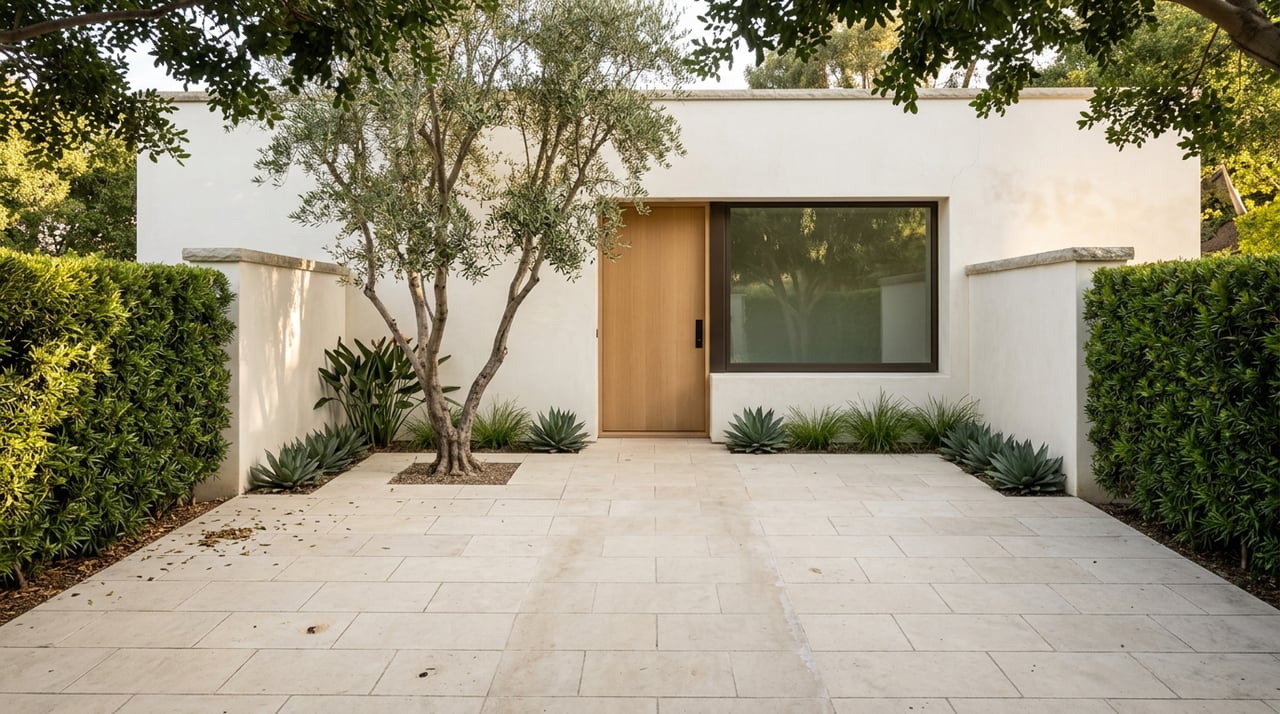
A seller in the Flats calls their agent to test the market quietly. No sign, no open house, just a few calls to trusted buyer's agents and maybe one photo shared in a private group text. Then a well-meaning colleague forwards that photo to a broader distribution list, or the listing shows up in a marketing email that reaches beyond a handful of vetted contacts. Under California's clear cooperation rules, that single act of public marketing starts a clock: the listing must be submitted to the local MLS within one business day, unless the seller has a documented, signed exemption in place before any exposure happens.
The seller who thought they were testing the water privately just watched their "coming soon" turn into a dated, publicly visible listing, days on market ticking from day one. In a market where perception moves faster than price, that is not a technicality. It is the moment a pricing strategy either holds or falls apart.
This is the part most advice about Beverly Hills off-market sales skips. The conversation usually starts and ends with privacy: celebrities don't want a sign in the yard, buyers like exclusive access, and everyone assumes going quiet is simply what luxury sellers do. That framing misses the more useful question, which is when going quiet actually serves the seller's financial interest and when it just adds risk without adding value.
The share that goes quiet climbs with the price, and that climb is the tell
Off-market activity in Beverly Hills is not a flat cultural habit. It scales with price, and the scale itself is informative.
| Price tier | Share sold off-market |
|---|---|
| Broader Beverly Hills luxury sales | Around 12 percent |
| $15 million and above | 40 to 50 percent |
| $50 million and above | Roughly 70 percent |
If privacy alone explained the pattern, you would expect a fairly consistent rate across every price band. High-net-worth sellers exist below $15 million too. Instead the rate roughly quadruples once you cross the $15 million line and climbs again above $50 million. That pattern points to something other than a blanket preference for discretion. It points to a market where the cost of going public actually falls as price rises, while the cost of staying public stays flat or grows.
What actually explains the climb
Two figures from Beverly Hills' Q1 2026 transaction data explain most of it.
The first is how buyers pay. Across all single-family sales in the quarter, roughly 65 to 70 percent closed entirely in cash. In the $10 million-plus tier, that climbs to 85 to 90 percent. A cash buyer does not need a lender, which means they do not need an appraisal, which means they do not need a stack of public comparable sales to justify the price to an underwriter. Below that tier, more buyers are financing at least part of the purchase, and their lenders lean on exactly the kind of public sale data that a pocket listing withholds.
The second is how far price actually moves during negotiation. The overall sale-to-list ratio across Beverly Hills sat at roughly 91.4 to 94.0 percent in Q1 2026, meaning the average closed price landed 6 to 9 percent below the original ask. But homes under $3.5 million traded much tighter, at a 98.4 percent ratio. That is a market where competitive tension, the kind that public exposure creates by putting a listing in front of every qualified buyer and agent at once, is doing real work to protect the seller's number. Pull that listing out of public view at $2 million and you are not buying privacy so much as giving up the one mechanism keeping your price close to ask.
Put the two together and the logic reverses the common advice. Below roughly $10 to $15 million, full MLS exposure is usually what protects a seller, because it feeds the appraisal your buyer's lender will require and it creates the competitive tension that keeps the sale-to-list ratio tight. Above that line, cash dominates, appraisal stops being the bottleneck, and the buyer pool capable of transacting at that level is small enough that a private, vetted process can reach nearly everyone who could plausibly buy the home anyway. That is the point where discretion stops costing anything.
The jurisdiction line that changes the math for BHPO sellers
There is a second variable that has nothing to do with marketing strategy and everything to do with where a property actually sits, and it is one many sellers do not think to check until it shows up on a closing statement.
Beverly Hills proper, meaning the Flats between Sunset and Wilshire and the Trousdale Estates hillside, is an independent, self-governing city. Properties there fall under Beverly Hills Unified School District and city services, and because Los Angeles's Measure ULA is a City of Los Angeles tax, homes inside Beverly Hills city limits are exempt from it entirely.
Beverly Hills Post Office, commonly shortened to BHPO, is a different story despite sharing the same 90210 zip code and mailing address. Guard-gated communities like Beverly Park, Mulholland Estates, and The Summit sit in this hillside area above Sunset, and they fall inside Los Angeles city limits, not the independent city of Beverly Hills. That means Los Angeles Unified School District instead of BHUSD, and it means Measure ULA applies in full: a 4 percent transfer tax on sales above $5 million, rising to 5.5 percent above $10 million.
For a seller sitting in a BHPO estate near either threshold, that tax is owed regardless of whether the sale happens on the open MLS or through the quietest possible pocket process. Going off-market does not exempt a BHPO transaction from ULA. What it can do is change how a seller and buyer structure timing and price around a tax that a Flats or Trousdale neighbor two streets away will never see on their closing statement at all. Any seller comparing notes with a friend across that boundary should know they may be running two entirely different tax equations on paper-similar homes.
What still applies once a listing goes quiet
Going off-market in California does not suspend the rules that protect buyers and sellers, and treating it that way is where sellers get into trouble.
- A pocket listing is legal only when it stays genuinely private. The moment marketing reaches beyond a defined, documented circle, the one-business-day MLS submission requirement applies unless a signed seller exemption was in place first.
- Agents still owe full fiduciary duty and disclosure of material facts about the property, whether the sale happens on the MLS or through a single phone call.
- A pocket strategy cannot be used to screen out protected classes of buyers. Limiting exposure to a vetted network is legal. Using that network to exclude anyone on a protected basis is not, and documentation of a seller's actual instructions matters if that ever gets questioned.
- Reduced exposure narrows the buyer pool by design, which is the tradeoff a seller is accepting, not a side effect they can expect to avoid.
A short list of questions worth answering before choosing either path
Does my home's price point put me above or below where cash buyers dominate? Below roughly $10 to $15 million, assume most of your buyer pool needs financing and needs public comps to get it.
Is my property inside Beverly Hills city limits or in a BHPO enclave like Beverly Park, Mulholland Estates, or The Summit? That answer determines whether Measure ULA is part of your math at all.
Has any marketing already gone out beyond a documented private circle? If so, the MLS clock may already be running whether the seller intended that or not.
What is my actual sale-to-list expectation at my price band? A $2 million listing and a $20 million listing are negotiating in two different markets, and the exposure strategy that protects one can quietly cost the other.
There is no single right answer here, only a right answer for a specific property at a specific price, sitting on a specific side of a jurisdictional line most people never think to check. That is the work worth doing before a sign goes up, or deliberately does not.
If you are weighing a private sale against a full market launch for a Beverly Hills property, Joel + Dorit Cooper can walk through the pricing and exposure math for your specific address and tier. Schedule a Consultation to talk through the numbers before you decide which way to go.