If you want a home base that puts dining, shopping, and daily errands within easy reach, condo living in West Hollywood is worth a close look. At the same time, buying a condo here means you are not just choosing a floor plan or a view. You are also choosing a building, an HOA, and a monthly cost structure that can vary more than many buyers expect. This guide will help you understand how condo living works in West Hollywood, what to watch for, and which questions can help you buy with confidence. Let’s dive in.
Why West Hollywood Suits Condo Living
West Hollywood is built for an urban lifestyle. The city covers about 1.9 square miles, has a Walk Score of 91, and the city reports that four out of five housing units are in large multi-family buildings.
That shape and density matter when you are deciding whether a condo fits your goals. In West Hollywood, many buyers are choosing convenience, walkability, and access to local services as much as they are choosing the home itself.
The city also supports car-light living. West Hollywood highlights options such as Cityline, the free PickUp trolley on weekend nights along Santa Monica Boulevard, and Metro bus and rail connections.
For many buyers, that means a condo can support a more flexible day-to-day routine. If you value being close to major corridors and amenities, this market often makes that possible.
What West Hollywood Condos Look Like
One of the most useful things to know about West Hollywood condo living is that there is no single “typical” building. Current inventory shows roughly 200 condos for sale, with a median listing price around $900,000 and average market time near 77 days.
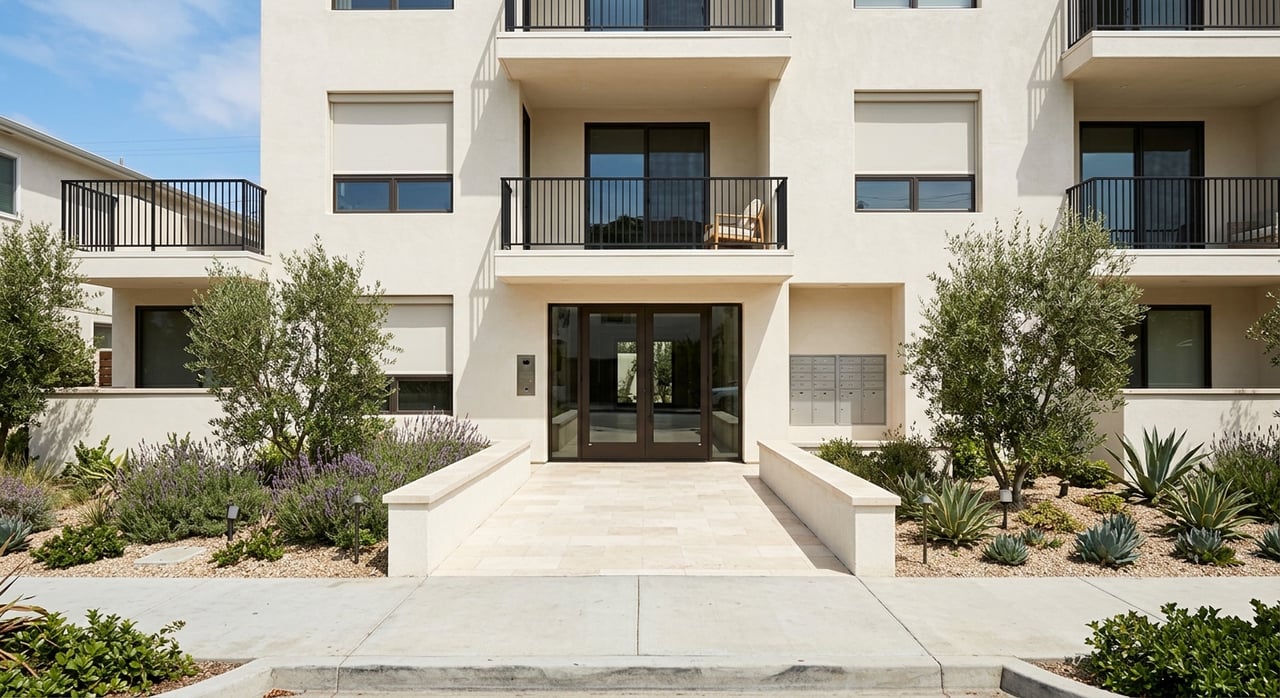
The housing mix is broad. Current listings point to everything from 1960s courtyard buildings and 1970s amenity-rich complexes to 1978 townhouse-style units and newer contemporary townhouse projects.
That variety gives buyers real choice, but it also means you need to compare buildings carefully. A lower-profile older building may offer a very different ownership experience than a newer complex with more amenities and higher dues.
Common features in current listings include:
- Balconies, patios, and rooftop decks
- In-unit laundry
- Gated or deeded parking
- Guest parking
- Storage areas
- Security features
- Pool, spa, or sauna amenities
- Fitness centers
- EV charging
- On-site management
Some units are townhouse-style, with no neighbors above or below. For buyers who want more privacy than a traditional apartment-style condo, that layout can be especially appealing.
Lifestyle Is a Big Part of Value
In West Hollywood, location within the city can shape your experience as much as the condo itself. The city is closely identified with the Sunset Strip, Santa Monica Boulevard, and the Design District, so many buyers are prioritizing proximity to restaurants, nightlife, shopping, and everyday services.
The city also has more than eighty designated historic and cultural resources and six historic districts. That helps explain why different pockets of West Hollywood can feel distinct in architecture, street character, and building style.
For you as a buyer, this means it is smart to think beyond square footage. Ask yourself how much your daily routine depends on walkability, nearby conveniences, and access to the parts of West Hollywood you plan to use most.
How Condo Ownership Works in California
A condo in California is a common interest development. In simple terms, you own your individual unit and share ownership or use rights in common areas such as hallways, garages, lobbies, recreation spaces, or other building features.
When you buy into a condo building, HOA membership is automatic and stays with the property. The homeowners association is governed by documents that commonly include articles, bylaws, CC&Rs, and operating rules.
This matters because your ownership is shaped not only by the unit you buy, but also by the building’s governance and financial health. The HOA has authority to collect dues, manage common areas, and enforce rules set out in its governing documents.
Why HOA Review Matters So Much
In West Hollywood, HOA review is one of the most important parts of a condo purchase. Regular assessments help fund fixed expenses, operations, reserves, administration, and contingency costs.
The California Department of Real Estate notes that regular assessments can increase through required procedures, and special assessments may be used for major repairs or unexpected expenses. HOA dues can also rise over time, and delinquent payments can lead to liens.
That is why a condo purchase should never be judged by the unit alone. Before removing contingencies, buyers should review the HOA budget, reserve funding, insurance, governing documents, rules, and any known history of deferred maintenance or special assessments.
If you are considering a newer project or a condo conversion, the DRE public-report process is also meant to disclose key material facts before a buyer signs a purchase contract. That can include assessments, common-area information, and governance details.
Monthly Costs Go Beyond the Mortgage
One of the biggest mistakes condo buyers make is focusing too heavily on the asking price. In West Hollywood, the more accurate number is your total monthly carrying cost.
Current listings show HOA dues ranging from the mid-$400s to just over $1,000 per month in sample properties. What those dues cover can vary widely from one building to another.
In some cases, dues may include items such as:
- Water
- Gas
- Trash
- Hot water
- Cable
- Earthquake insurance
- Air conditioning
- Pool, spa, or gym access
- Security
- Part of electricity
A lower HOA fee does not always mean a lower total cost. If one building has lower dues but weaker reserves or fewer covered expenses, you may not actually come out ahead.
A better comparison is to look at all major monthly costs together:
- Mortgage payment
- Property taxes
- Insurance
- HOA dues
- Parking costs, if separate
- Any known special assessments
That combined number often gives you the clearest picture of affordability.
Parking Needs Extra Attention
Parking can be a major quality-of-life issue in West Hollywood condo living. Current listings show a wide range, from one assigned space to two side-by-side spaces.
The city is updating parking rules to remove minimum parking requirements citywide and comply with state rules that allow shared and unbundled parking in new residential buildings. The city says these changes mainly affect new development, not existing buildings or neighborhood permit programs.
For you as a buyer, the practical step is simple: verify exactly what comes with the unit. You should confirm whether parking is deeded, assigned, leased separately, or available only on a first-come basis.
That detail can affect both convenience and long-term value. It is especially important if you own more than one vehicle, expect guests often, or want certainty around your parking arrangement.
Leasing Rules Can Affect Future Flexibility
If you may want to rent out the condo in the future, do not assume every building or city rule will allow the same level of flexibility. In West Hollywood, the city now requires an initial minimum lease term of one year for condos and single-family residences when they are leased.
The city also directs owners of condo rentals to its Non-Rent-Controlled Registry. If renting is part of your longer-term plan, it is important to confirm the unit’s status and review the building’s own leasing rules before you buy.
This is one area where early review can save you time and frustration. A condo that works well as a primary residence may not fit your future rental strategy if the HOA or city requirements limit what you had in mind.
What to Check Before You Buy
West Hollywood condos often work best for buyers who want a low-maintenance, walkable, amenity-rich urban lifestyle. If that sounds like your priority, condo living here can be a strong fit.
If you want abundant private outdoor space, minimal shared governance, or especially low monthly carrying costs, you may need to be more selective. Building type, age, layout, and HOA structure all play a major role.
At showings and during due diligence, these are some of the most useful questions to ask:
- How many parking spaces are included?
- Are the parking spaces deeded or assigned?
- What exactly do the HOA dues cover?
- How strong are the reserves?
- Are any special assessments planned?
- What are the rental rules?
- What are the pet, noise, and renovation rules?
- How old is the building?
- Have major systems been updated?
For older or converted buildings, reserve studies and system condition deserve extra attention. In a market like West Hollywood, where older housing stock sits alongside newer infill projects, those details can have a real impact on your ownership costs and peace of mind.
The Bottom Line on West Hollywood Condo Living
Condo living in West Hollywood can offer a compelling mix of convenience, access, and lifestyle. The city’s compact layout, walkability, and concentration of multi-family housing make condos a natural part of the local market.
The key is to evaluate the full picture. When you look closely at the building, HOA, parking, leasing rules, and total monthly costs, you are much more likely to find a condo that fits both your day-to-day life and your long-term plans.
If you are weighing condo options in West Hollywood, a thoughtful local strategy can make the process much clearer. For tailored guidance on West Hollywood condos and the broader Westside market, connect with Joel Cooper.
FAQs
What is condo living like in West Hollywood?
- Condo living in West Hollywood is generally urban, walkable, and centered around proximity to dining, shopping, services, and major local corridors, with many homes located in multi-family buildings.
What do HOA fees usually cover in West Hollywood condos?
- HOA coverage varies by building, but current listings show dues may include items such as water, gas, trash, hot water, cable, earthquake insurance, air conditioning, security, and access to amenities like pools or gyms.
What should buyers review before purchasing a West Hollywood condo?
- Buyers should review the HOA budget, reserve funding, insurance, governing documents, rules, parking details, building condition, and any history of special assessments or deferred maintenance.
What should buyers know about parking in West Hollywood condo buildings?
- Parking arrangements can differ widely, so buyers should confirm whether spaces are deeded, assigned, leased separately, or first-come, first-served before moving forward.
Can you rent out a condo in West Hollywood later?
- West Hollywood requires an initial minimum lease term of one year for condos when they are leased, and buyers should also verify the building’s own leasing rules and the unit’s registry status before purchase.