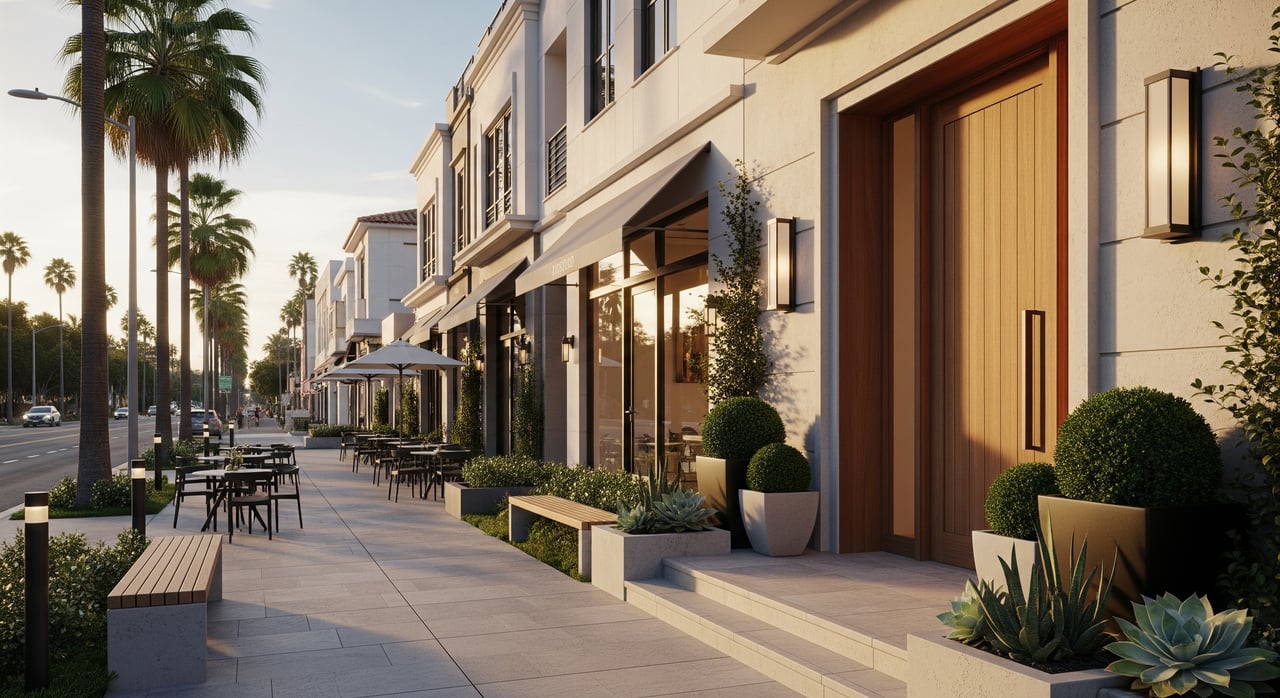
Wondering if you can live mostly on foot in West Hollywood without giving up the lifestyle you love? You’re not alone. Many people come to WeHo for its energy and realize quickly that daily errands, dining, and entertainment are often just a short walk away. In this guide, you’ll learn how walkable living really works in West Hollywood, from the streets you’ll use most to the housing choices and tradeoffs to consider. Let’s dive in.
Why West Hollywood is walkable
West Hollywood is compact and built up, with a high concentration of shops, restaurants, and services along a few key corridors. That design puts everyday needs close together, so you can often leave the car at home. Many third-party indices classify West Hollywood as a “Walker’s Paradise,” which reflects how many errands you can complete on foot in several parts of the city.
Walkability here is corridor-driven. You’ll find ground-floor retail and mid-rise buildings on the main streets, then smaller apartments and some single-family pockets one or two blocks away. City policies also prioritize pedestrian safety and transit connections, which supports a practical car-light lifestyle. Conditions vary block by block, so it helps to understand where you’ll walk most.
Key corridors and what you can do on foot
Santa Monica Boulevard
This is WeHo’s east–west backbone and a daily go-to for many residents. You’ll find restaurants, coffee shops, specialty stores, gyms, and services in close succession, with steady foot traffic midday and into the evening. Buses run frequently along this corridor, making it a convenient transit spine as well.
Use Santa Monica Boulevard for quick errands, casual meals, and everyday services. If you live a block or two north or south, you can often pick up groceries, hit the gym, and meet friends without getting in the car.
Sunset Boulevard and The Sunset Strip
Sunset has a strong nightlife and entertainment focus, with music venues, bars, hotels, and theaters that draw crowds in the evening. That energy makes certain stretches very walkable for nights out. Traffic volumes can be heavy, and some long walks along the Strip are less comfortable, but the immediate areas around venues are typically active and well lit.
Think of Sunset for events and evening plans. If you live nearby, you can walk to shows and dinners and skip the late-night parking hunt.
Robertson Boulevard
Robertson is known for boutique shopping and dining, with pedestrian-scale blocks that are easy to browse on foot. It is a popular spot for lunch, dinner, and weekend strolls. If your home sits just off Robertson, you can cover shopping and dining in a quick loop.
Melrose and La Cienega
These corridors offer a mix of retail, galleries, and services, and they connect to other shopping nodes. Sidewalk activity is steady throughout the day. If you enjoy design showrooms or gallery hopping, you can plan outings that stay walkable from one stop to the next.
Living one to two blocks off the action
Neighborhoods like the Norma Triangle, West Hollywood West, and areas north of Santa Monica often place you within a 5 to 15 minute walk of daily services. Many residents choose multifamily buildings just off the main streets, which keeps things quieter while preserving easy corridor access.
A day on foot: what it looks like
- Grocery and errands: Small markets and specialty grocers are common on the corridors. Larger supermarkets may be a longer walk or a short bus ride away.
- Dining and nightlife: Dinner, drinks, and late-night venues are often within a short walk. Sidewalks fill up at peak hours, so expect lively street life.
- Deliveries and rideshare: Food delivery and rideshare are routine. Narrow sidewalks and busy curbs can affect pickup points, so plan a clear meeting spot near an intersection.
Getting around without a personal car
Transit basics
There is no Metro rail station within West Hollywood city limits. Most trips rely on frequent bus routes along Santa Monica Boulevard, Sunset, and key north–south streets, with connections to nearby rail stations outside the city. Transit is viable for many daily needs and some commutes, though travel times can be longer and may require transfers.
Walking comfort and crossings
Major corridors generally have continuous sidewalks, curb ramps, and high-visibility crosswalks at busy intersections. Nighttime lighting, sidewalk dining, and street trees add comfort on many blocks. Some stretches of high-traffic arterials can feel less pedestrian-friendly for longer walks, so it helps to map your regular routes during both day and evening.
Bikes and scooters
Designated bikeways and on-street bike lanes exist on several corridors, with some protected lanes in limited areas. Coverage is not uniform across every neighborhood. Shared micromobility options, like e-scooters and dockless bikes, are available regionally and can be a practical last-mile solution in WeHo, subject to local rules.
When you still want a car
Many residents choose to own fewer vehicles than in suburban areas, which can reduce transportation costs. You may still want a car for certain commutes, errands that require hauling, or weekend trips. A car-light approach often pairs one shared vehicle with regular walking, transit, and micromobility.
Parking on busy, walkable streets
On commercial corridors, parking is managed with meters and time limits to increase turnover. In nearby residential areas, permit zones help control spillover parking from nightlife and shopping. These systems keep curb space functioning but can make guest parking a planning item.
Tips to manage parking gracefully:
- Confirm your building’s assigned spaces and any guest parking rules before you sign a lease or purchase.
- For visitors, plan on metered curb space, paid lots, or timed parking in nearby areas.
- For rideshare and deliveries, choose a safe pickup spot with clear curb access and avoid blocked driveways.
- If you expect frequent guests, consider locations with nearby lots or corridors that offer short-term paid parking.
Housing choices that fit a car-light lifestyle
Typical buildings and layouts
West Hollywood’s housing stock leans heavily toward multifamily homes. You will see mid-rise apartments, classic walk-ups, and condominiums, especially near the main streets. Many corridor buildings include ground-floor commercial spaces, which adds convenience and street activity.
Ownership and rental mix
The city has a high share of rentals, which works well for people testing car-light living before buying. Buyers often focus on condominiums and small multifamily properties for ownership near walkable amenities. Single-family homes exist but are limited and usually carry a higher price point relative to multifamily options.
Price, space, and parking tradeoffs
Proximity to shops and entertainment often commands a premium. Expect smaller units at a given price compared with more suburban areas. On-site parking may be limited, and spaces can be tandem or compact, which is worth weighing against the benefit of a walkable address.
Your walk test checklist
Take this checklist on your next tour to evaluate a home for walkable living:
- Time the walk to the nearest grocery, pharmacy, coffee shop, and a few favorite restaurants.
- Note sidewalk quality, crosswalks, lighting, and traffic at different times of day.
- Identify nearby bus routes and stops for daily errands and potential commutes.
- Confirm assigned parking, guest options, and any building policies for bikes or scooters.
- Test noise levels and window insulation during peak dining or nightlife hours.
- Check delivery access, package storage, and a clear rideshare pickup spot.
Smart strategies for buyers, sellers, and investors
Buyers
Prioritize location within one or two blocks of your most-used corridor. Look for floor plans that make smaller spaces live larger, plus practical features like bike storage, in-unit laundry, and well-insulated windows. If parking is important, verify size, clearance, and whether spaces are deeded or assigned.
Sellers
Highlight walkable advantages in your marketing. Note proximity to key corridors, typical walk times to daily amenities, and convenient transit stops. Showcase parking details, guest options, and any building amenities that support car-light living, such as secure bike rooms or package lockers.
Small-scale investors
Walkable addresses can draw steady rental interest, especially for smaller units near corridors. Limited parking can be acceptable to many renters if the location is strong. Consider value-add improvements that support car-light living, such as bike storage, delivery solutions, or sound attenuation for units near lively streets.
Putting it all together
Walkable living in West Hollywood works because essential destinations line a few compact corridors, with homes sitting just off the action. You gain flexibility to run errands, dine out, and connect with friends on foot while using transit or micromobility for longer trips. With clear expectations around parking, noise, and unit size, you can choose a home that fits your lifestyle and enjoy the best of WeHo without relying on a car for every outing.
If you want help finding a home that supports car-light living, or you’re planning to sell a walkable property with the right positioning, our team is here to guide you. Reach out to Joel Cooper to explore options and Schedule a Consultation.
FAQs
Can you live in West Hollywood without a car?
- Many residents do. Daily needs are often within walking distance, with bus routes, bikeways, and micromobility supporting trips that are not convenient on foot.
Which blocks are most walkable in West Hollywood?
- Corridors like Santa Monica Boulevard, Robertson, parts of Sunset, and Melrose or La Cienega offer the densest mix of destinations, with quieter homes one or two blocks away.
How do guest parking and permits work in West Hollywood?
- Commercial streets use meters and time limits, while nearby residential areas often require permits. Guests usually rely on metered curb space, paid lots, or drop-offs.
Is walking at night in West Hollywood practical?
- Many areas are active and well lit due to nightlife, though comfort levels vary by block and time. Plan your routes and stay aware during peak evening hours.
What housing types work best for car-light living in West Hollywood?
- Condos, flats, and walk-up apartments near the main corridors place amenities close by and often include fewer parking spaces, which suits a walkable lifestyle.
How does walkability affect resale value in West Hollywood?
- Walkability can boost demand, though factors like corridor noise and limited parking affect appeal for some buyers. Unit details such as parking, floor level, and outdoor space matter.