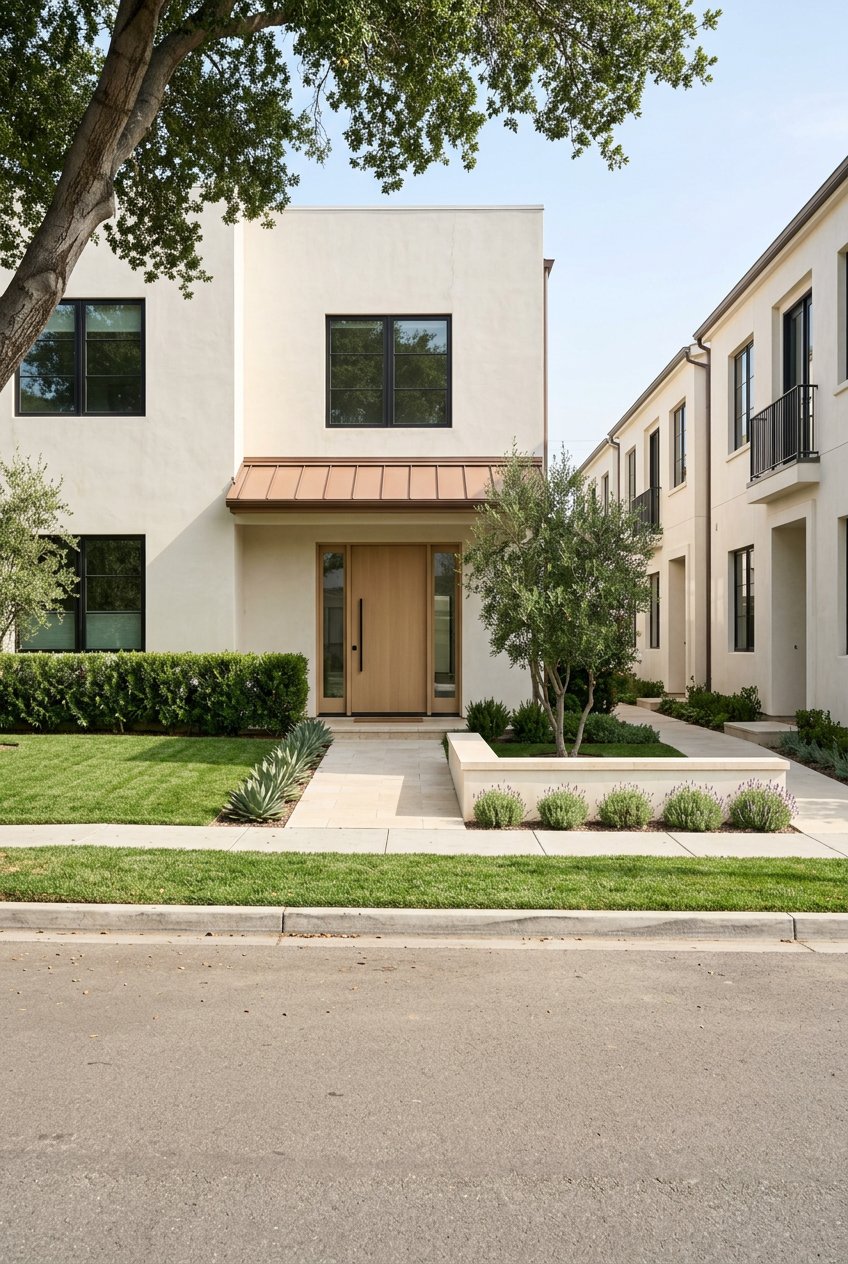
Trying to decide between a house and a townhome in Encino? You are not alone. The right choice comes down to how you want to live, your budget, and how much maintenance you want to take on. In this guide, you will get clear, Encino-specific differences on costs, space, HOA rules, insurance, financing, and a simple checklist to verify before you buy. Let’s dive in.
Prefer lower maintenance, a more attainable entry price, and proximity to Ventura Boulevard? A townhome or condo often fits best. Want maximum privacy, a yard, and long-term flexibility for additions or an ADU? A single-family house is usually the better match.
Encino prices at a glance
Public market snapshots show Encino’s overall median sale price near the low-to-mid seven figures. One widely used aggregator reported about $1.316 million in February 2026 for all home types. In practice, prices vary by block, building, and condition.
- Townhomes and condos in Encino often list and sell from the mid $400,000s to the high $800,000s, especially around Zelzah, Moorpark, and near Ventura Boulevard.
- Detached single-family homes commonly start in the low $1 millions and climb into multi-million-dollar estates, particularly in Encino Hills and around Lake Encino Drive.
Local medians and days on market change quickly. Always confirm with current MLS data for the streets you are targeting.
Maintenance and control
Single-family houses
With a house, you typically handle all upkeep for the structure and lot. That usually includes roof, exterior, yard and trees, pool, fencing, driveway, and any detached structures. You decide when and how work gets done, but you also manage vendors, timelines, and budgets.
Townhomes and condos
In a common-interest development, the homeowners association manages shared elements defined in the project’s governing documents. Exterior maintenance, landscaping, roofs, and common-area amenities are often covered, but scope varies by building. Review the project’s CC&Rs, bylaws, budget, reserve study, and insurance certificate to confirm exactly who pays for what. The California Department of Real Estate explains what documents you can and should receive in its buyer FAQ for common-interest developments. You can read that guidance in the California Department of Real Estate’s FAQ on common-interest developments.
- Learn what HOAs must disclose in the California Department of Real Estate’s overview of common-interest developments.
Privacy, noise, and space
Privacy and sound
Detached homes provide the most separation from neighbors, which usually means greater privacy and less shared-wall noise. Townhomes share at least one wall, so you will want to check party walls, windows, and HVAC placement during showings and ask about noise transfer.
Outdoor living and expansion
- Houses often deliver larger private yards, room for a pool, and potential for additions or ADUs, subject to City of Los Angeles zoning and permits.
- Townhomes tend to have smaller patios or terraces and shared landscaping. Storage and parking vary by complex, from private two-car garages to assigned or tandem spaces.
Monthly costs and insurance
HOA dues and what they cover
Townhome and condo communities charge monthly HOA dues that can include water, trash, exterior insurance, landscaping, pool or gym upkeep, and common utilities. In Encino, it is common to see dues around a few hundred dollars per month in some complexes, with examples near $400. Actual dues vary widely based on age, amenities, and insurance needs. Always verify current dues and what they include, and ask whether the HOA carries earthquake coverage or requires separate policies.
California’s Davis-Stirling framework establishes how HOAs operate and disclose information. For clarity on governance and buyer rights, see the Davis-Stirling Common Interest Development Act and the California Department of Real Estate’s FAQ.
- Review the Davis-Stirling Common Interest Development Act for HOA governance basics.
- See the California Department of Real Estate’s FAQ on common-interest developments for buyer disclosures and document requests.
Homeowners insurance differences
- Condo or townhome owners usually buy an HO-6 policy that covers interior finishes, personal property, liability, and loss assessments. The HOA carries a master policy for exteriors and common areas. Confirm whether the master policy is “bare walls” or “all-in,” since that affects how much you insure. For a plain-English breakdown of HO-6 coverage and how it complements the HOA’s master policy, see this Forbes Advisor explainer on condo insurance.
- Single-family homeowners typically carry an HO-3 policy that covers the entire dwelling and detached structures. These policies often cost more than HO-6 coverage because they insure the full structure. Forbes also outlines the differences between HO-3 and HO-6 policies.
Financing and resale factors
Project approval and loan options
Financing rules can differ for townhomes and condos. If a unit is legally a condominium, many lenders must review the project’s reserves, insurance, owner-occupancy ratios, and litigation status. Projects that do not meet standards can be non-warrantable, which can limit conventional, FHA, or VA loan options. Fee-simple townhomes that are not condo-form may be underwritten more like single-family homes. Ask your lender early whether the unit’s legal structure will trigger a project review. For a detailed look at what lenders evaluate, see Fannie Mae’s project standards.
- Read Fannie Mae’s project standards so you know what lenders look for in condo and townhome projects.
Resale dynamics to consider
Condos can be more price-sensitive in slower markets, especially if the HOA faces special assessments, ongoing litigation, or low reserves that shrink the buyer pool or inhibit certain loans. Single-family homes usually attract a broader audience and offer more control over condition and improvements, though they have higher maintenance demands and a higher price of entry. If you are comparing two properties you love, ask your agent to model multiple exit scenarios for each.
Where you will find each in Encino
- Townhomes and condos are common near Ventura Boulevard, including clusters along Zelzah and Moorpark, plus several small courtyard or gated communities on nearby streets. These locations appeal if you value walkability to shops and services.
- Detached single-family homes dominate the hillside and interior pockets, including Encino Hills and the Lake Encino area. Expect larger lots, more privacy, and a wider range of architectural styles.
Quick choose: townhome or house?
Choose a townhome if you want:
- Lower maintenance with exterior care handled by an HOA.
- A more attainable entry price for Encino with convenient access to Ventura Boulevard.
- Amenities like a pool or gym without the responsibility of private upkeep.
Choose a single-family house if you want:
- Maximum privacy, no shared walls, and more control over improvements.
- A larger yard for outdoor living, pets, or a pool.
- Flexibility to add living space or explore an ADU, subject to city approvals.
What to verify before you decide
Use this checklist for any Encino home you are considering. Always confirm with your lender, the HOA’s documents, and the city’s rules for the exact address.
- Lender and project review
- Ask your lender if the unit or project is warrantable for conventional, FHA, or VA financing. Confirm whether a condo project review is required and request the lender’s condo/project checklist if applicable. See what lenders evaluate in Fannie Mae’s project standards.
- HOA document request for condos/townhomes
- CC&Rs, bylaws, rules, and any amendments.
- Current operating budget and last 2 to 3 years of financials.
- Latest reserve study and evidence of funded reserves.
- Recent board meeting minutes to identify recurring issues or planned assessments.
- Insurance certificate and master policy summary, including earthquake coverage details and deductibles. The California Department of Real Estate’s FAQ explains these disclosures.
- Special assessments and litigation
- Ask whether any assessments are planned or pending and whether litigation exists that could affect resale or loan eligibility. Lenders evaluate these under Fannie Mae’s project standards.
- Physical and site checks
- Houses: roof age, foundation and drainage, major systems, pool equipment, trees, and landscaping.
- Townhomes/condos: condition of common areas, roofs and building envelope, signs of deferred maintenance, and clarity on which exterior items are the HOA’s responsibility.
- True monthly cost comparison
- Townhome/condo: mortgage + HOA dues + HO-6 insurance + property taxes + utilities + parking/garage fees if applicable.
- House: mortgage + HO-3 insurance + property taxes + yard/pool maintenance + utilities + a contractor/repair budget.
- Property tax and assessments
- Use Los Angeles County tools to review the parcel’s actual tax rate and line items, including local assessments. Start with the Los Angeles County Property Appraiser portal.
Your next step
If you are still on the fence, tour one example of each. Walk the streets at different times of day, listen for ambient noise, and review HOA documents or recent contractor invoices before you fall in love. Then ask your lender and agent to model total monthly costs for both properties, including reserves and a realistic set-aside for repairs.
If you want a clear plan tailored to your timeline and lifestyle, connect with Joel Cooper. Schedule a Consultation and let’s compare real address options side by side so you can buy with confidence.
FAQs
Are townhomes always cheaper than houses in Encino?
- Often but not always. Townhomes tend to list lower on average than detached homes nearby, yet size, age, finishes, and exact micro-location can create overlap. Use current MLS comps for the exact block.
Do HOA dues affect how much I can borrow for a loan?
- Yes. Lenders include monthly HOA dues in your debt-to-income ratio, which can lower the loan amount you qualify for. Large or imminent assessments can also slow or limit loan options. See how lenders evaluate projects in Fannie Mae’s standards.
If I buy a townhome, do I still need insurance?
- Yes. You will typically need an HO-6 policy for interior coverage, contents, liability, and loss assessments, while the HOA covers exteriors and common areas. Learn the differences in this Forbes Advisor overview.
Where are most Encino townhomes located?
- Many multi-unit and townhouse communities are near Ventura Boulevard and along streets like Zelzah and Moorpark. Detached homes dominate Encino Hills, Lake Encino, and interior residential pockets.